There is something undeniably transforming about bringing handmade textiles into a living space. While color sets the mood of a room, texture provides the feeling. It is the difference between a house that looks staged and a home that feels lived-in and loved. When we talk about interior design, we often focus on furniture placement or paint swatches, but the tactile elements—the things we touch every day—are what truly ground us. This is particularly true for throw pillows. A pillow is not just a decorative accent; it is a source of comfort, a prop for a weary back, and a soft place to land after a long day.
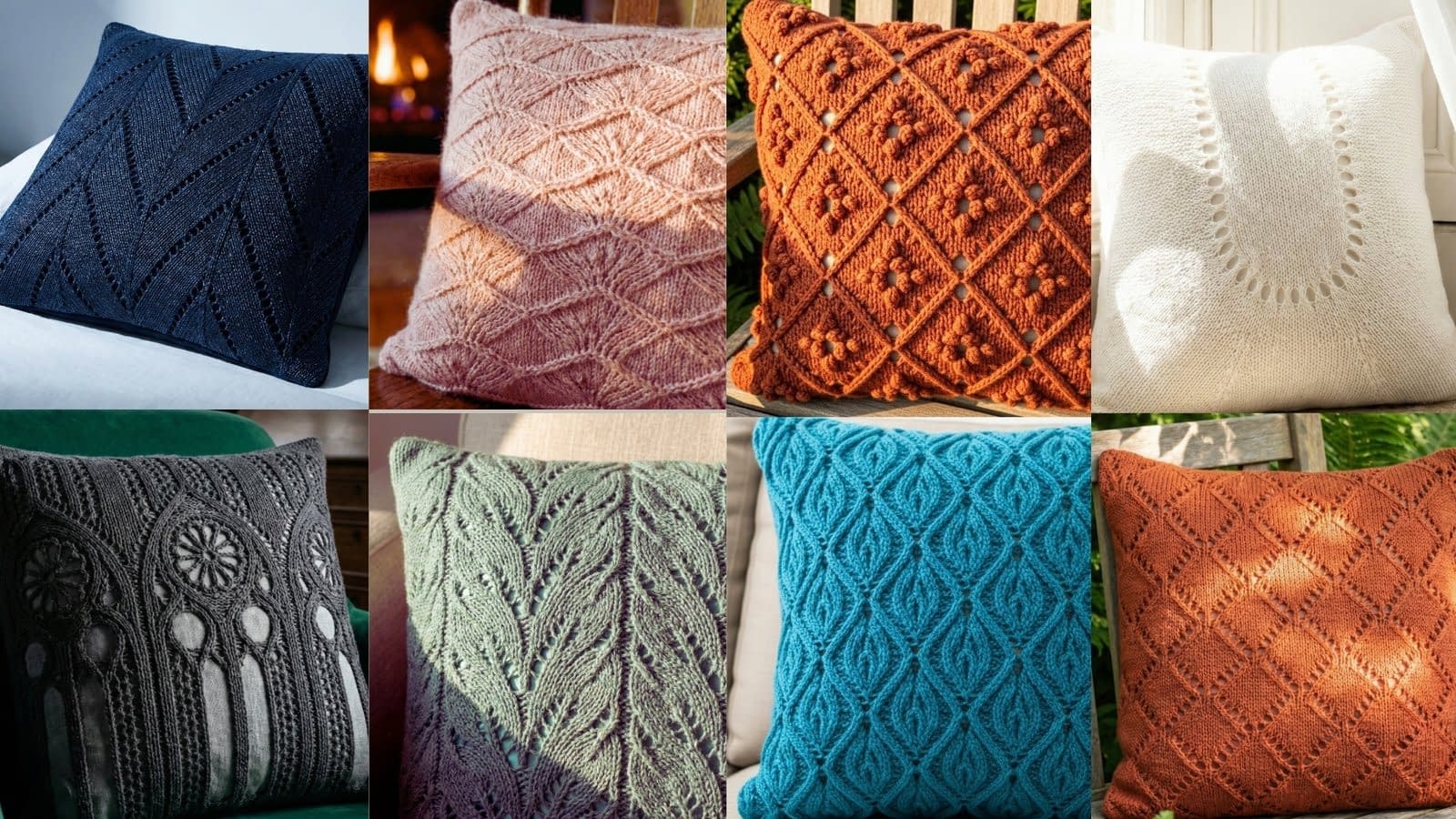
In this comprehensive guide, we are going to explore 8 knit textured pillow cover patterns that range from organic, botanical inspirations to sharp, modern geometrics. Knitting your own home decor allows you to control the fiber content, the exact color match, and most importantly, the tactile experience. We have curated a collection that uses relief stitches, eyelets, and cables to catch the light and create depth. Whether you are looking to replicate the serenity of a garden with leaf motifs or the drama of gothic architecture with high-contrast pointelle, these patterns will help you achieve a high-end, custom look.
We will be covering everything you need to know to create these covers, from the materials required to the specific, step-by-step movements of your needles. To ensure these instructions are accessible to everyone, regardless of their familiarity with reading knit charts, we have written out every instruction in full sentences without abbreviations. This encourages a mindful, slow-knitting approach where you can focus on the rhythm of the yarn and the formation of the fabric. Let us pick up our needles and begin this journey into texture.
1. The Botanical Leaf Lace

This design is inspired by the serene beauty of a eucalyptus grove. The pattern features cascading columns of leaf shapes created by precise eyelet holes, resembling climbing vines. The beauty of this pattern lies in the interplay between the solid stockinette leaf shapes and the open spaces that define them. When placed over a matching satin liner, the depth is magnified, making the leaves appear to float. This is a perfect project for a beige linen sofa or a reading nook where you want to invite a sense of nature indoors.
Skill Level
Intermediate. This pattern requires concentration to track the placement of the eyelet holes and decrease stitches that shape the leaves.
Finished Size
Approximately 18 inches by 18 inches. This fits a standard square pillow insert.
Materials
- Worsted weight yarn in a soft eucalyptus green (approximately 400 yards).
- Knitting needles: Size US 8 (5.0 mm), straight or circular.
- Yarn needle for weaving in ends.
- Four large buttons for the closure.
- Fabric liner (optional but recommended in matching satin).
Notes
The front panel creates the textured leaf design, while the back is worked in a simple stockinette stitch with a button band for easy removal. The “yarn over” instruction creates the eyelet hole, while the “knit two together” or “slip, slip, knit” instructions reduce the stitch count to compensate for the new hole, keeping the total stitch count constant.
Instructions
Front Panel (Leaf Lace)
Start by casting on 82 stitches using the eucalyptus green yarn.
Bottom Border Row One: Knit every stitch across the row. Row Two: Purl every stitch across the row. Row Three: Knit every stitch across the row. Row Four: Purl every stitch across the row.
Leaf Pattern Section You will now begin the main pattern.
Row One (Right Side): Knit one stitch (edge stitch). Purl two stitches, knit one stitch, knit two stitches together, knit one stitch, bring the yarn forward to create a yarn over, purl one stitch, bring the yarn forward to create a yarn over, knit one stitch, slip two stitches individually as if to knit then knit them together through the back loop, knit one stitch, purl two stitches. Repeat the instructions between the asterisks across the row until one stitch remains. Knit the last stitch.
Row Two and all even-numbered rows: Purl the first stitch. Knit the next two stitches, purl the next seven stitches, knit the next two stitches. Repeat the instructions between the asterisks across the row until one stitch remains. Purl the last stitch.
Row Three: Knit one stitch. Purl two stitches, knit two stitches together, knit one stitch, bring the yarn forward to create a yarn over, knit one stitch, bring the yarn forward to create a yarn over, knit one stitch, slip two stitches individually as if to knit then knit them together through the back loop, purl two stitches. Repeat the instructions between the asterisks across the row until one stitch remains. Knit the last stitch.
Row Five: Knit one stitch. Purl two stitches, knit two stitches together, bring the yarn forward to create a yarn over, knit three stitches, bring the yarn forward to create a yarn over, slip two stitches individually as if to knit then knit them together through the back loop, purl two stitches. Repeat the instructions between the asterisks across the row until one stitch remains. Knit the last stitch.
Row Seven: Knit one stitch. Purl two stitches, bring the yarn forward to create a yarn over, knit one stitch, slip two stitches individually as if to knit then knit them together through the back loop, purl one stitch, knit two stitches together, knit one stitch, bring the yarn forward to create a yarn over, purl two stitches. Repeat the instructions between the asterisks across the row until one stitch remains. Knit the last stitch.
Row Nine: Knit one stitch. Purl two stitches, knit one stitch, bring the yarn forward to create a yarn over, slip two stitches individually as if to knit then knit them together through the back loop, purl one stitch, knit two stitches together, bring the yarn forward to create a yarn over, knit one stitch, purl two stitches. Repeat the instructions between the asterisks across the row until one stitch remains. Knit the last stitch.
Row Eleven: Knit one stitch. Purl two stitches, knit two stitches, bring the yarn forward to create a yarn over, slip three stitches individually, knit them all together, bring the yarn forward to create a yarn over, knit two stitches, purl two stitches. Repeat the instructions between the asterisks across the row until one stitch remains. Knit the last stitch.
Repeat Rows One through Twelve until the piece measures approximately 18 inches from the cast-on edge.
Top Border Work four rows of stockinette stitch (knit one row, purl one row). Bind off all stitches loosely.
Back Panel (Button Envelope)
The back is made in two pieces to create an envelope opening.
Bottom Back Piece Cast on 82 stitches. Work in stockinette stitch (knit one row, purl one row) until the piece measures 8 inches. Work 4 rows of ribbing (knit two stitches, purl two stitches) to create a sturdy band. Bind off all stitches in the rib pattern.
Top Back Piece (Buttonhole Band) Cast on 82 stitches. Work in stockinette stitch until the piece measures 12 inches. Next Row (Buttonhole Row): Knit 10 stitches, bind off 2 stitches, knit 18 stitches, repeat between asterisks 3 times, knit remaining stitches. Next Row: Purl across, casting on 2 new stitches over the gap where you bound off in the previous row. Work 2 more rows in stockinette. Bind off all stitches.
Assembly
Lay the front panel flat with the right side facing up. Place the Top Back Piece on top (right side down), aligning the top raw edges. Place the Bottom Back Piece on top of that (right side down), aligning the bottom raw edges. The ribbed bands should overlap in the center. Sew around all four outer edges using a sturdy mattress stitch. Turn the cover right side out through the envelope opening. Sew the buttons onto the bottom back band corresponding to the buttonholes. Insert your pillow form and smooth out the leaf lace.
2. The Zig-Zag Chevron Eyelet

This striking pillow cover features a deep midnight blue hue, reminiscent of a night sky. The texture is defined by sharp, zigzagging lines of small holes, known as eyelets, which create a modern, geometric V-pattern. The choice of yarn is crucial here; a yarn with a slight silky sheen will catch the light on the “ridges” of the chevron, emphasizing the architectural quality of the knit. This design is high-contrast and sophisticated, perfect for a minimalist bedroom or a contemporary living space.
Skill Level
Beginner to Intermediate. The pattern relies on a repetitive rhythm of increases and decreases that is easy to memorize once established.
Finished Size
20 inches by 20 inches.
Materials
- DK or Light Worsted weight yarn in midnight blue (silk or bamboo blend recommended for sheen).
- Knitting needles: Size US 6 (4.0 mm).
- Stitch markers.
- Tapestry needle.
Instructions
Main Body (Worked in one long piece)
Instead of a front and back, we will knit a long rectangle that folds over the pillow form. Cast on 101 stitches.
Setup Rows Knit four rows to create a garter stitch border that will prevent the bottom from curling.
Chevron Pattern Row One (Right Side): Knit one stitch. Knit one stitch, bring the yarn forward to create a yarn over, knit four stitches, slip one stitch knit-wise then knit two stitches together and pass the slipped stitch over the knit two together (a double decrease), knit four stitches, bring the yarn forward to create a yarn over. Repeat the instructions between the asterisks until two stitches remain. Knit the last two stitches.
Row Two (Wrong Side): Purl every stitch across the row.
Row Three: Knit one stitch. Knit one stitch, bring the yarn forward to create a yarn over, knit four stitches, slip one stitch knit-wise then knit two stitches together and pass the slipped stitch over, knit four stitches, bring the yarn forward to create a yarn over. Repeat between asterisks until the last two stitches. Knit the last two stitches.
Row Four: Purl every stitch across the row.
Row Five: Repeat Row One. Row Six: Knit every stitch across the row. (This creates a “garter ridge” which adds texture to the zig-zags).
Repeat these six rows continuously. As you work, you will see the fabric naturally form waves at the cast-on edge. Continue working in this pattern until the piece measures approximately 45 inches long. This length allows for the front (20 inches), the back (20 inches), and a flap (5 inches).
Finishing the Flap Once you reach 45 inches, end after a Row Six. Knit four more rows (garter stitch) to stabilize the top edge. Bind off all stitches knit-wise.
Assembly
Lay the long strip flat with the wrong side facing up. Fold the bottom edge up 20 inches. Fold the top edge (the flap) down 5 inches so it overlaps the bottom section. You should now have a square shape. Pin the side seams where the three layers of fabric overlap (at the flap area) and where the two layers overlap (the rest of the side). Using your tapestry needle and the midnight blue yarn, sew up both side seams securely. Turn the pillow cover right side out. The points of the chevron pattern should run horizontally across the pillow. Insert the pillow form through the flap opening. The geometric precision of the eyelets against the dark blue yarn will create a stunning visual focus.
3. The Intricate Diamond Eyelet

Evoking the warmth of a summer evening, this terracotta orange pillow features an elegant diamond eyelet pattern. The openwork holes are arranged to outline large diamond shapes, revealing glimpses of the liner underneath. This pattern plays with light and shadow; when sunlight hits the pillow, the texture creates intricate shadows on the surrounding furniture. It is designed to look detailed and complex, offering a “bohemian luxury” aesthetic suitable for outdoor teak furniture or a cozy sunroom.
Skill Level
Intermediate. This pattern involves moving the position of eyelets outward and then inward to create the diamond shape.
Finished Size
16 inches by 16 inches.
Materials
- Cotton or cotton-blend yarn in terracotta orange (cotton provides great stitch definition and durability for semi-outdoor use).
- Knitting needles: Size US 7 (4.5 mm).
- A fabric liner in a matching terracotta or a contrasting cream color.
- Zipper (14 inch) for closure.
Instructions
Front Panel
Cast on 75 stitches. Knit 4 rows in garter stitch (knit every row) to create a border.
Diamond Pattern Row One (Right Side): Knit four stitches. Knit three stitches, knit two stitches together, bring the yarn forward to create a yarn over, knit one stitch, bring the yarn forward to create a yarn over, slip two stitches individually then knit them together through the back loop, knit three stitches. Repeat between asterisks until five stitches remain. Knit the last five stitches.
Row Two and all even Rows: Purl all stitches.
Row Three: Knit four stitches. Knit two stitches, knit two stitches together, bring the yarn forward to create a yarn over, knit three stitches, bring the yarn forward to create a yarn over, slip two stitches individually then knit them together through the back loop, knit two stitches. Repeat between asterisks until five stitches remain. Knit the last five stitches.
Row Five: Knit four stitches. Knit one stitch, knit two stitches together, bring the yarn forward to create a yarn over, knit five stitches, bring the yarn forward to create a yarn over, slip two stitches individually then knit them together through the back loop, knit one stitch. Repeat between asterisks until five stitches remain. Knit the last five stitches.
Row Seven: Knit four stitches. Knit two stitches together, bring the yarn forward to create a yarn over, knit seven stitches, bring the yarn forward to create a yarn over, slip two stitches individually then knit them together through the back loop. Repeat between asterisks until five stitches remain. Knit the last five stitches.
Now we begin closing the diamond shape.
Row Nine: Knit four stitches. Bring the yarn forward to create a yarn over, slip two stitches individually then knit them together through the back loop, knit seven stitches, knit two stitches together, bring the yarn forward to create a yarn over. Repeat between asterisks until five stitches remain. Knit the last five stitches.
Row Eleven: Knit four stitches. Knit one stitch, bring the yarn forward to create a yarn over, slip two stitches individually then knit them together through the back loop, knit five stitches, knit two stitches together, bring the yarn forward to create a yarn over, knit one stitch. Repeat between asterisks until five stitches remain. Knit the last five stitches.
Row Thirteen: Knit four stitches. Knit two stitches, bring the yarn forward to create a yarn over, slip two stitches individually then knit them together through the back loop, knit three stitches, knit two stitches together, bring the yarn forward to create a yarn over, knit two stitches. Repeat between asterisks until five stitches remain. Knit the last five stitches.
Row Fifteen: Knit four stitches. Knit three stitches, bring the yarn forward to create a yarn over, slip two stitches individually then knit them together through the back loop, knit one stitch, knit two stitches together, bring the yarn forward to create a yarn over, knit three stitches. Repeat between asterisks until five stitches remain. Knit the last five stitches.
Repeat Rows One through Sixteen until the piece measures 16 inches. End with 4 rows of garter stitch and bind off.
Back Panel
Cast on 75 stitches. Work in stockinette stitch (knit one row, purl one row) until the piece measures 16 inches. Bind off.
Assembly
Pin the zipper between the bottom edge of the front panel and the bottom edge of the back panel. Sew the zipper in place using a sewing needle and thread. Open the zipper halfway. Place the Front and Back panels right sides together. Sew the remaining three sides using the yarn and tapestry needle. Turn right side out. Insert your fabric liner and pillow form.
4. The Vintage Shell / Fan Stitch

There is a profound sense of nostalgia woven into the very structure of the Fan and Feather stitch, often also known as the Old Shale pattern. It evokes memories of handmade heirlooms, grandmother’s afghans, and the quiet comfort of a cottage in the countryside. For this pillow cover, we envision a powdery antique rose pink, a color that feels timeless and soft. The knit fabric creates beautiful, scalloped waves that ripple horizontally across the surface. This texture is delicate and airy, making it the perfect companion for a rustic wooden rocking chair placed near a warm, glowing fireplace. The undulation of the stitches captures the light, creating soft shadows in the troughs of the waves and highlighting the yarn fibers on the crests. This is the epitome of the “cottagecore” aesthetic—cozy, vintage, and lovingly handmade.
Skill Level
Beginner to Intermediate. While the finished fabric looks intricate and impressive, the pattern is actually built on a very simple four-row repeat that is easy to memorize.
Finished Size
18 inches by 18 inches.
Materials
- DK (Double Knitting) or Light Worsted weight yarn in antique rose pink (approximately 450 yards). A yarn with a little halo, like an alpaca blend, adds to the vintage softness.
- Knitting needles: Size US 6 (4.0 mm).
- Five vintage-style wooden or pearl buttons.
- Tapestry needle.
Instructions
Front Panel
To ensure the scallops form correctly, we need a specific multiple of stitches. Cast on 92 stitches. (This allows for 5 repeats of the 18-stitch pattern, plus one edge stitch on each side).
Bottom Border Work six rows of garter stitch (knit every stitch on every row) to create a flat, stable bottom edge that will not curl.
Vintage Shell Pattern Row One (Right Side): Knit every stitch across the row.
Row Two (Wrong Side): Purl every stitch across the row.
Row Three (Right Side – The Pattern Row): Knit the first edge stitch. Knit two stitches together, knit two stitches together, knit two stitches together. (Bring the yarn forward to create a yarn over, knit one stitch) – repeat the instruction in these parentheses six times total. Knit two stitches together, knit two stitches together, knit two stitches together. Repeat the instructions between the asterisks across the row until only one stitch remains. Knit the last stitch.
Row Four (Wrong Side): Knit every stitch across the row. (Knitting on the wrong side creates a “garter ridge” on the front, which emphasizes the horizontal wave and frames the eyelets).
Repeat Rows One through Four continuously. You will notice the fabric naturally forming a wavy, scalloped edge at the bottom. As you continue, the “fans” or “shells” will stack on top of each other, creating vertical columns of waves. Continue working this pattern until the piece measures approximately 18 inches from the cast-on edge.
Top Border End after completing a Row Four. Work four rows of garter stitch (knit every row). Bind off all stitches loosely knit-wise.
Back Panel (Button Band Style)
To maintain the vintage feel, the back will be closed with buttons rather than a hidden zipper. We will knit this in two parts.
Bottom Back Piece Cast on 92 stitches. Work in stockinette stitch (knit one row, purl one row) until the piece measures 8 inches. Switch to a ribbing pattern (knit two stitches, purl two stitches) for one inch. Bind off all stitches in the rib pattern.
Top Back Piece (Buttonhole Band) Cast on 92 stitches. Work in stockinette stitch until the piece measures 12 inches. Switch to a ribbing pattern (knit two stitches, purl two stitches) for half an inch. Buttonhole Row: Rib 6 stitches, bind off 2 stitches, rib 17 stitches, repeat between asterisks 4 times, rib to end. Next Row: Work in rib pattern, casting on 2 stitches backward over the gaps created by the bind-offs in the previous row. Work two more rows in rib pattern. Bind off all stitches in rib.
Assembly
Lay the Front Panel flat with the right side facing up. Place the Top Back Piece on top, right side facing down, aligning the top edges. Place the Bottom Back Piece on top, right side facing down, aligning the bottom edges. The ribbed bands should overlap in the center of the pillow. Pin the four outer edges securely. Using your tapestry needle and the rose pink yarn, sew around the entire square perimeter using a mattress stitch or backstitch. Turn the pillow cover right side out through the envelope opening. Sew the vintage buttons onto the bottom back band, aligning them with the buttonholes on the top band. Insert your pillow form. The scalloped edges of the fan stitch will naturally pull the fabric into a lovely, organic shape that looks beautiful on any chair.
5. The Victorian Horseshoe Lace

There is an undeniable grace to the Victorian aesthetic—a balance of lightness, structure, and intricate detail. This pillow cover, designed in a pure ivory white, captures that essence perfectly. The pattern consists of vertical columns of U-shaped eyelet motifs. To some, they look like lucky horseshoes; to others, they resemble fountains spraying water. The choice of a fine-gauge merino wool is essential here. It provides a crisp stitch definition that allows the eyelets to remain open and distinct, while the softness creates a luxurious hand-feel. Styled on a sun-drenched window seat, the sunlight passes through the eyelet holes, creating a dappled shadow pattern that feels ethereal and airy. This is a pattern for those who want to bring a touch of vintage elegance and brightness into their home.
Skill Level
Intermediate. This pattern uses a classic lace repeat that is intuitive once established, but requires consistent counting to ensure the columns line up correctly.
Finished Size
18 inches by 18 inches.
Materials
- Fine-gauge or Sport weight merino wool in ivory white (approximately 500 yards).
- Knitting needles: Size US 5 (3.75 mm).
- Stitch markers.
- Four small pearl buttons for the closure.
Instructions
Front Panel
Cast on 91 stitches. This number includes the stitches for the pattern repeats plus edge stitches to make sewing easier.
Bottom Border Knit six rows of garter stitch (knit every row) to create a flat, non-curling edge.
Horseshoe Lace Pattern Row One (Right Side): Knit one stitch. Knit one stitch, bring the yarn forward to create a yarn over, knit three stitches, slip one stitch knit-wise then knit two stitches together and pass the slipped stitch over the knit two together (double decrease), knit three stitches, bring the yarn forward to create a yarn over. Repeat the instructions between the asterisks across the row until ten stitches remain. Knit one stitch, bring the yarn forward to create a yarn over, knit three stitches, slip one stitch knit-wise then knit two stitches together and pass the slipped stitch over, knit three stitches, bring the yarn forward to create a yarn over, knit one stitch. Knit the final edge stitch.
Row Two: Purl every stitch across the row.
Row Three: Knit one stitch. Knit two stitches, bring the yarn forward to create a yarn over, knit two stitches, slip one stitch knit-wise then knit two stitches together and pass the slipped stitch over, knit two stitches, bring the yarn forward to create a yarn over, knit one stitch. Repeat the instructions between the asterisks to the end of the row. Knit the final edge stitch.
Row Four: Purl every stitch across the row.
Row Five: Knit one stitch. Knit three stitches, bring the yarn forward to create a yarn over, knit one stitch, slip one stitch knit-wise then knit two stitches together and pass the slipped stitch over, knit one stitch, bring the yarn forward to create a yarn over, knit two stitches. Repeat the instructions between the asterisks to the end of the row. Knit the final edge stitch.
Row Six: Purl every stitch across the row.
Row Seven: Knit one stitch. Knit four stitches, bring the yarn forward to create a yarn over, slip one stitch knit-wise then knit two stitches together and pass the slipped stitch over, bring the yarn forward to create a yarn over, knit three stitches. Repeat the instructions between the asterisks to the end of the row. Knit the final edge stitch.
Row Eight: Purl every stitch across the row.
Repeat Rows One through Eight continuously. As you work, you will see the “horseshoes” stacking on top of one another. Continue until the piece measures 18 inches. Finish with six rows of garter stitch and bind off loosely.
Back Panel
Cast on 91 stitches. Work in stockinette stitch (knit one row, purl one row) until the piece measures 18 inches. Bind off.
Assembly
Lay the front and back panels with right sides facing each other. Sew three of the sides together using a neat backstitch. Turn the cover right side out. Insert the pillow form. For the final edge, fold the raw edges inward and sew the pearl buttons evenly across the opening. Create small button loops with crochet chains or simply sew the opening shut if you do not plan to remove the cover frequently.
6. The Gothic Cathedral Pointelle

For a dramatic, moody interior, nothing compares to the Gothic Cathedral Pointelle. Knit in a dark charcoal grey, this pattern mimics the pointed arches and soaring lines of gothic architecture. The design uses varying sizes of eyelet holes to create a structure that looks like stained glass windows. When placed on a jewel-toned emerald green chair, the dark grey wool contrasts beautifully, and the “windows” of the pattern reveal the fabric liner underneath. This pattern is texture-heavy and artistic, perfect for a space that celebrates shadow, depth, and bold design choices.
Skill Level
Advanced Intermediate. This pattern requires precise attention to the placement of double yarn overs (wrapping the yarn twice) to create larger holes.
Finished Size
20 inches by 20 inches.
Materials
- Worsted weight wool yarn in dark charcoal grey.
- Knitting needles: Size US 8 (5.0 mm).
- A light grey or silver fabric liner to place inside (crucial for showing off the pattern).
Instructions
Front Panel
Cast on 90 stitches.
Setup Knit four rows in seed stitch (knit one, purl one, repeating across, and alternating on the next row) to create a textured border.
Cathedral Pattern Row One (Right Side): Knit two stitches. Knit one stitch, bring the yarn forward to create a yarn over, knit three stitches, slip one stitch knit-wise then knit two stitches together and pass the slipped stitch over, knit three stitches, bring the yarn forward to create a yarn over. Repeat between asterisks to the last eight stitches. Knit one stitch, bring the yarn forward to create a yarn over, knit three stitches, slip one stitch knit-wise then knit two stitches together and pass the slipped stitch over, knit the last stitch.
Row Two and all Even Rows: Purl every stitch.
Row Three: Knit two stitches. Knit two stitches, bring the yarn forward to create a yarn over, knit two stitches, slip one stitch knit-wise then knit two stitches together and pass the slipped stitch over, knit two stitches, bring the yarn forward to create a yarn over, knit one stitch. Repeat between asterisks to the end.
Row Five: Knit two stitches. Knit three stitches, bring the yarn forward to create a yarn over, knit one stitch, slip one stitch knit-wise then knit two stitches together and pass the slipped stitch over, knit one stitch, bring the yarn forward to create a yarn over, knit two stitches. Repeat between asterisks to the end.
Row Seven: Knit two stitches. Knit four stitches, bring the yarn forward to create a yarn over, slip one stitch knit-wise then knit two stitches together and pass the slipped stitch over, bring the yarn forward to create a yarn over, knit three stitches. Repeat between asterisks to the end.
Row Nine (The Arch Peak): Knit two stitches. Knit one stitch, knit two stitches together, bring the yarn forward, wrap the yarn around the needle a second time (double yarn over), slip one stitch knit-wise then knit one stitch and pass the slipped stitch over, knit five stitches. Repeat between asterisks to the end.
Row Ten: Purl across. When you reach the double yarn over, purl the first loop and knit the second loop to create two separate stitches.
Repeat these ten rows until the piece measures 20 inches. Finish with four rows of seed stitch and bind off.
Back Panel
Cast on 90 stitches. Work in stockinette stitch until the piece measures 20 inches. Bind off.
Assembly
Sew the front and back panels together on three sides. Insert your light grey fabric liner first, ensuring it is smooth, then insert the pillow form. Sew the final side closed. The light liner will shine through the “arches,” emphasizing the architectural design.
7. The Diamond & Bobble Hybrid

This pattern is a tactile celebration, combining the elegance of openwork diamonds with the fun, 3D texture of bobbles. Designed in a warm terracotta, this pillow cover fits seamlessly into a bohemian or eclectic home. The diamond outlines are created with eyelets, similar to previous patterns, but the center of each diamond features a raised “bobble” or popcorn stitch. This adds a physical dimension that begs to be touched. Resting on weathered outdoor furniture, the golden hour sunlight will cast strong shadows from the bobbles, highlighting the intricate craftsmanship.
Skill Level
Intermediate. You must be comfortable making bobbles, which involves increasing and decreasing into a single stitch multiple times.
Finished Size
18 inches by 18 inches.
Materials
- Aran or heavy worsted weight yarn in warm terracotta.
- Knitting needles: Size US 9 (5.5 mm).
- Tapesty needle.
Instructions
Making a Bobble
In this pattern, when the instruction says “Make Bobble,” follow these steps: Into the next stitch, knit one, purl one, knit one, purl one, knit one (all into the same stitch, making five loops). Turn your work. Purl five stitches. Turn your work. Knit five stitches. Turn your work. Purl five stitches. Turn your work. Slip two stitches knit-wise, knit three stitches together, pass the two slipped stitches over. You are back to one stitch. Pull the yarn tight to pop the bobble forward.
Front Panel
Cast on 81 stitches. Work four rows of garter stitch.
Diamond & Bobble Pattern Row One (Right Side): Knit four stitches. Knit three stitches, knit two stitches together, bring the yarn forward to create a yarn over, knit one stitch, bring the yarn forward to create a yarn over, slip one stitch knit-wise then knit one stitch and pass the slipped stitch over, knit three stitches. Repeat between asterisks across the row. End with knit four.
Row Two and all Even Rows: Purl all stitches.
Row Three: Knit four stitches. Knit two stitches, knit two stitches together, bring the yarn forward to create a yarn over, knit three stitches, bring the yarn forward to create a yarn over, slip one stitch knit-wise then knit one stitch and pass the slipped stitch over, knit two stitches. Repeat between asterisks. End with knit four.
Row Five (Bobble Row): Knit four stitches. Knit one stitch, knit two stitches together, bring the yarn forward to create a yarn over, knit two stitches, Make Bobble, knit two stitches, bring the yarn forward to create a yarn over, slip one stitch knit-wise then knit one stitch and pass the slipped stitch over, knit one stitch. Repeat between asterisks. End with knit four.
Row Seven: Knit four stitches. Knit two stitches together, bring the yarn forward to create a yarn over, knit seven stitches, bring the yarn forward to create a yarn over, slip one stitch knit-wise then knit one stitch and pass the slipped stitch over. Repeat between asterisks. End with knit four.
Rows Nine through Fourteen: Reverse the eyelet movement (bringing the lines back together to close the diamond), similar to the diamond pattern in section 3.
Repeat these rows until the piece measures 18 inches. Finish with four rows of garter stitch and bind off.
Back Panel
Cast on 81 stitches. Work in a simple textured stitch like moss stitch (knit one, purl one for two rows, then switch order) to create a durable back. Bind off at 18 inches.
Assembly
Place right sides together and sew three sides. Turn right side out. Push the bobbles from the inside to ensure they are popping out correctly. Insert pillow form and sew the final edge.
8. The Candle Flame Openwork

The final pattern in our collection is the fluid and organic Candle Flame Openwork. Knit in a vibrant teal blue, this pattern resembles flickering flames or teardrops. It is created by a fascinating combination of converging knit stitches and eyelets that pull the fabric into gentle waves. The texture has a beautiful vertical flow, drawing the eye upward. Styled on a neutral beige sectional, this pillow adds a splash of color and a softness that contrasts with the square lines of modern furniture. The yarn should be soft and pliable to allow the “flames” to drape naturally.
Skill Level
Advanced. This pattern involves clustered increases and decreases that change the stitch count within the repeat, though the total count remains balanced over the full pattern repeat.
Finished Size
18 inches by 18 inches.
Materials
- Sport or DK weight yarn in teal blue (alpaca or silk blends work well for drape).
- Knitting needles: Size US 6 (4.0 mm).
Instructions
Front Panel
Cast on 98 stitches. Knit two rows of garter stitch.
Candle Flame Pattern Row One (Right Side): Purl two stitches. Knit into the front, back, and front of the next stitch (making three stitches from one), purl two stitches, slip one stitch knit-wise then knit one stitch and pass the slipped stitch over, knit three stitches, knit two stitches together, purl two stitches. Repeat between asterisks to the end.
Row Two: Knit two stitches. Purl five stitches, knit two stitches, purl three stitches, knit two stitches. Repeat to end.
Row Three: Purl two stitches. Knit three stitches, purl two stitches, slip one stitch knit-wise then knit one stitch and pass the slipped stitch over, knit one stitch, knit two stitches together, purl two stitches. Repeat to end.
Row Five: Purl two stitches. Knit one stitch, knit into the front and back of the next stitch, knit one stitch, purl two stitches, slip one stitch knit-wise then knit two stitches together and pass the slipped stitch over (double decrease), purl two stitches. Repeat to end.
Row Seven: Purl two stitches. Slip one stitch knit-wise then knit one stitch and pass the slipped stitch over, knit three stitches, knit two stitches together, purl two stitches, knit into the front, back, and front of the next stitch, purl two stitches. Repeat to end.
(Note: The pattern shifts here so the flames alternate positions).
Continue working the logical progression of opening new flames with increases while closing the old flames with decreases. The fabric will naturally undulate. Continue until the piece measures 18 inches.
Back Panel
Cast on 98 stitches. Work in stockinette stitch. Because the front panel is wavy, block the back panel aggressively or knit it slightly wider to match the width of the front panel’s widest point.
Assembly
Pin the wavy edges of the front panel to the straight edges of the back panel, easing the fabric in as you sew. This creates a slightly gathered, puffy look that enhances the “flame” effect. Sew three sides, insert pillow, and close the final side.
Conclusion
Knitting for your home is an act of creating sanctuary. Each of these 8 textured pillow cover patterns offers a different mood and a different tactile experience. From the structured geometry of the Honeycomb Trellis to the soft, organic flow of the Botanical Leaf Lace, there is a technique here to challenge every knitter and elevate every room.
By choosing high-quality yarns—merino, alpaca, cotton, or silk blends—and taking the time to work through these stitch patterns row by row, you are creating heirlooms that are far superior to mass-produced decor. We hope these detailed instructions give you the confidence to pick up your needles and start swatching. Whether you choose the moody Gothic Cathedral or the vibrant Candle Flame, the result will be a home that feels warmer, more personal, and beautifully textured. Happy knitting.